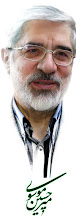
Narges Mousavi: “We cannot divulge the entire ordeal we have been forced to endure.”
By Banooye Sabz
October 25, 2013
Thursday October 24th, 2013 – [Kaleme] In an interview with Kaleme, opposition leader Mir Hossein Mousavi’s youngest daughter Narges Mousavi describes the details of the brutal and violent encounter with a female security officer who attacked them following their latest 2 1/2 hour visit with their parents on the occasion of Eyde Ghadir. The full content of Kaleme’s interview with Narges Mousavi is as follows:
Can you please describe the events that occurred today?
They called us yesterday and informed us that we would be allowed to have lunch with our parents on the occasion of Eyde Ghadir. We were of course overjoyed by the news. We were told that we would be allowed to visit for 2 1/2 hours, from 11:30am to 2:00pm. As has been customary with our visits to date, two female security agents were present during our entire visit. When it was time to leave, they asked us to enter the building next door in order to be searched.
Was the behavior by the security agents different than other occasions?
Yes, from the start the physical search seemed more aggressive than usual. It almost felt as though they were seeking to provoke. Perhaps they were looking for an excuse. Who knows. We had been allowed to meet with father a few times after his angioplasty last year, but never had we been search physically in the past. Why in the world is there a need for a bodily search when the security agents had been present all along? Particularly one conducted in such a horrendous manner? Where in the world is such behavior considered acceptable?
Had such an event occurred in the past?
No we were very surprised by their request to search us at the building belonging to the Ministry of Intelligence, particularly as they had already searched us upon entering our parents’ home. We nevertheless complied thinking perhaps they were fearful that we may have stolen something from our parents’ home! They began searching us, despite the fact that our entire visitation had taken place in the presence of the aforementioned two female security officers and they had never left our side. They even asked that we remove our undergarments; a request that was not only vulgar, but against Islamic customs. What is even more disgraceful is that their behavior and requests were so desecrating that I cannot bring myself to even describe them.
How did the altercations begin?
After we refused to comply with their request, this female officer insulted us and began a physical altercation. I tried to stop her by holding her hand and she responded by slapping me and my sister across the face. At that point we entered a physical altercation. When I held my hand up to stop her, she grabbed it and proceeded to bite my arm violently. I was surprised by her physical strength. It almost felt as though she had been trained for this type of thing. My arm was bleeding, it was scrapped and began to swell. She was also kind enough to leave her fingerprints on both my face and my sister’s!
Were your parents witnessing these events?
Unfortunately they were. My mom came to the building that belongs to the Intelligence Ministry next door to their house. They had closed the door to the yard and my mother was out there saying goodbye to us when the events occurred. During the entire ordeal, my father could hear the loud noises and the violent altercation that resulted from the brutal behavior of the security officers, from behind the barred windows of their kitchen that is East of the building belonging to the Ministry. He was extremely saddened and it goes without saying that given his heart condition he should not be subjected to such pressure. It was horrible.
Did anyone interfere and try to prevent this unacceptable behavior?
My mother and Mr. Foroughi the head of the prison guards arrived. Mother tried to separate us, but the female security officer had become so violent that no one could control her. Mr. Foroughi apologized and said that the security officer in question had no right to act this way. When we stated that she probably took her orders from him, he refuted our statement and insisted that she had never been given permission to conduct a bodily search. We asked Mr. Foroghi why we had been given permission to enter our parents’ home only to be subjected to such a humiliating form of bodily search. Was this to be our gift on the occasion of Eyde Ghadir?
Did you know the female security officer in question?
Yes we knew her. It was not the first time she had behaved in such an unacceptable manner. One of the female security officers had treated my father in such a dishonorable manner, affronting and accosting father while he was hospitalized last year, to the point that he was almost taken to his death bed. My father was sick and connected to an IV tube. If they had wanted to avoid further turmoil, they would have removed her from her post back then. Not only was she not removed, but instead she was given carte blanche do do as she pleases and treat the children of a political prisoner in such a disgraceful manner. You see, my father is not just an ordinary prisoner. He is a political prisoner. He was once the Prime Minister of our country. Should they have a right to affront and abuse him this way?
Why do you suppose they allowed you and your sisters to visit with your parents only to turn around and treat you this way? What is the meaning behind such behavior?
I am not sure what is going on behind closed doors. The truth is to this day not one entities within the ruling establishment has taken responsibility for our parents’ house arrest. Their fate has always been in the hands of the Supreme National Security Council, but in reality no one has been willing to accept any responsibility. I personally believe that there several factions at play. One faction is more extreme. Their goal is to wreak havoc and they have no interest in a more relaxed and improved political climate. There is also talk of a faction that seeks to calm the political climate by silencing us. We don’t want such a thing. We demand our parents’ unconditional release. We demand that they be held responsible for this illegal 1000 day house arrest. Taking us to see our parents after 1000 days of house arrest is not sufficient. In my opinion they must apologize for what they have done. They slap us in front of our mother? In front of our detained mother? Why?
Source: Kaleme http://www.kaleme.com/1392/08/03/klm-162600/
Banooye Sabz
http://banouyesabz.wordpress.com/2013/10/25/narges-mousavi-we-cannot-divulge-the-entire-ordeal-we-have-been-forced-to-endure/
Friday, October 25, 2013
Mir Hossein Mousavi’s Daughters Brutally Attacked By Security Agents on Eyde Ghadir
By Banooye Sabz
October 24, 2013
[The following is a translation of a status on the Facebook page of Narges Mousavi. She has requested that we share the account of what happened to them when they were granted visitation with their parents yesterday on the occasion of Eyde Ghadir. Please share widely.]
Greetings,
What you are about to read is an account of the events that occurred during our visit with our detained parents yesterday on the occasion of Eyde Ghadir:
On Wednesday October 24th, 2013 we were contacted by security agents who informed us that an exception would be made so we could have lunch with our parents. Of course this luncheon was in lieu of releasing them on the occasion of Eyde Ghadir, particularly given that we are now approaching the 1000 day mark of their house arrest.
We were told that we would be allowed to spend a total of 2/12 hours with our parents from 11:30am to 2:00pm. Two female security officers were present during our visit. Their pseudo names are Maryam and Sarah (the legal name of one is Mojgan Nazemi, born in 1983). One of these two women had shamelessly accosted and affronted father during the time he had been hospitalized, despite the fact that our mother has always treated them with a motherly respect, even going as far as gifting them the customary Eydi gift while under house arrest.
When our visitation hours came to an end this particular female security officer requested that we accompany her to a secure building belonging to the Ministry of Intelligence next to our parents’ house on Akhtar street. She wanted to conduct a bodily search ensuring that we had not illegally removed any items from our parents’ home while visiting. Though it was hard to believe at first, the demands of the security officer in question were not only unconventional but also disgusting to say the least. To our utter shock and dismay she even repeatedly insisted that we remove our under garments. Her behavior and the manner in which she treated us was anything but what is customary in Islamic tradition.
After refusing to remove our clothes, she attacked us, slapping both myself and my sister Zahra across the face. When I tried to stop her from hitting us she became even more violent, brutally biting my wrists. She repeatedly attacked us and when we finally called out for the head of the prison guards Mr. Foroughi, he of course apologized, but neither felt the need to explain the reason behind such a brutal and inhumane behavior.
During the entire time we were being attacked, my father was standing behind the iron bars of their kitchen that is to the East of the building belonging to the Ministry of Intelligence and he could hear the loud voices and noise arising from the brutal behavior of the security officers. Unfortunately my mother also witnessed their violent behavior.
I have a number of pictures that tell the story of this unfortunate and inhumane incident, including pictures of the head of the prison guards which will be made public if necessary.
I ask that you please share this account with everyone.
Narges Mousavi
Banooye Sabz
http://banouyesabz.wordpress.com/2013/10/24/mir-hossein-mousavis-daughters-brutally-attacked-by-security-agents-on-eyde-ghadir/
By Banooye Sabz
October 24, 2013
[The following is a translation of a status on the Facebook page of Narges Mousavi. She has requested that we share the account of what happened to them when they were granted visitation with their parents yesterday on the occasion of Eyde Ghadir. Please share widely.]
Greetings,
What you are about to read is an account of the events that occurred during our visit with our detained parents yesterday on the occasion of Eyde Ghadir:
On Wednesday October 24th, 2013 we were contacted by security agents who informed us that an exception would be made so we could have lunch with our parents. Of course this luncheon was in lieu of releasing them on the occasion of Eyde Ghadir, particularly given that we are now approaching the 1000 day mark of their house arrest.
We were told that we would be allowed to spend a total of 2/12 hours with our parents from 11:30am to 2:00pm. Two female security officers were present during our visit. Their pseudo names are Maryam and Sarah (the legal name of one is Mojgan Nazemi, born in 1983). One of these two women had shamelessly accosted and affronted father during the time he had been hospitalized, despite the fact that our mother has always treated them with a motherly respect, even going as far as gifting them the customary Eydi gift while under house arrest.
When our visitation hours came to an end this particular female security officer requested that we accompany her to a secure building belonging to the Ministry of Intelligence next to our parents’ house on Akhtar street. She wanted to conduct a bodily search ensuring that we had not illegally removed any items from our parents’ home while visiting. Though it was hard to believe at first, the demands of the security officer in question were not only unconventional but also disgusting to say the least. To our utter shock and dismay she even repeatedly insisted that we remove our under garments. Her behavior and the manner in which she treated us was anything but what is customary in Islamic tradition.
After refusing to remove our clothes, she attacked us, slapping both myself and my sister Zahra across the face. When I tried to stop her from hitting us she became even more violent, brutally biting my wrists. She repeatedly attacked us and when we finally called out for the head of the prison guards Mr. Foroughi, he of course apologized, but neither felt the need to explain the reason behind such a brutal and inhumane behavior.
During the entire time we were being attacked, my father was standing behind the iron bars of their kitchen that is to the East of the building belonging to the Ministry of Intelligence and he could hear the loud voices and noise arising from the brutal behavior of the security officers. Unfortunately my mother also witnessed their violent behavior.
I have a number of pictures that tell the story of this unfortunate and inhumane incident, including pictures of the head of the prison guards which will be made public if necessary.
I ask that you please share this account with everyone.
Narges Mousavi
Banooye Sabz
http://banouyesabz.wordpress.com/2013/10/24/mir-hossein-mousavis-daughters-brutally-attacked-by-security-agents-on-eyde-ghadir/
Opposition Leader Mir Hossein Mousavi Taken to Nour Medical Center for a Medical Checkup
By Banooye Sabz
October 24, 2013
Wednesday October 23rd, 2013 [Kaleme] – Mir Hossein Mousavi was taken to Nour Medical Center for an MRI and a routine checkup and returned to house arrest at Akhtar Street upon completion of the necessary tests.
Mousavi, now under house arrest for approximately 1000 days, was hospitalized for a period of 10 days at Sina Hospital earlier this year during the month of Ramadan as a result of concerns arising from heart complications and other internal ailments. At the time, Mousavi’s hospitalization was conditional upon his family refraining from informing the public about his medical condition. Following completion of the necessary medical tests and confirmation by the hospital physicians of Mousavi’s health and recovery, he and his wife Zahra Rahnavard were once again returned to house arrest.
Mousavi’s physicians have requested that he receive medical checkups on a regular basis. The first of such checkups took place yesterday when Mousavi was taken to visit his trusted physicians accompanied by security agents. Kalame reports that Mousavi is in good health.
Source: Kaleme http://kaleme.org/1392/08/01/klm-162410/
Banooye Sabz
http://banouyesabz.wordpress.com/2013/10/24/opposition-leader-mir-hossein-mousavi-taken-to-nour-medical-center-for-a-medical-checkup/
By Banooye Sabz
October 24, 2013
Wednesday October 23rd, 2013 [Kaleme] – Mir Hossein Mousavi was taken to Nour Medical Center for an MRI and a routine checkup and returned to house arrest at Akhtar Street upon completion of the necessary tests.
Mousavi, now under house arrest for approximately 1000 days, was hospitalized for a period of 10 days at Sina Hospital earlier this year during the month of Ramadan as a result of concerns arising from heart complications and other internal ailments. At the time, Mousavi’s hospitalization was conditional upon his family refraining from informing the public about his medical condition. Following completion of the necessary medical tests and confirmation by the hospital physicians of Mousavi’s health and recovery, he and his wife Zahra Rahnavard were once again returned to house arrest.
Mousavi’s physicians have requested that he receive medical checkups on a regular basis. The first of such checkups took place yesterday when Mousavi was taken to visit his trusted physicians accompanied by security agents. Kalame reports that Mousavi is in good health.
Source: Kaleme http://kaleme.org/1392/08/01/klm-162410/
Banooye Sabz
http://banouyesabz.wordpress.com/2013/10/24/opposition-leader-mir-hossein-mousavi-taken-to-nour-medical-center-for-a-medical-checkup/
Wednesday, October 9, 2013
President explains his achievements of trip to New York for 68th United Nations General Assembly
President Hassan Rouhani referring to his visit to New York, said the most important achievement of the trip was realization of the fact that ground is apt for solving issues.
news id: 72087 - Saturday 28 September 2013 - 12:35
The President made the remarks while talking to reporters upon his arrival in Mehrabad international airport here Saturday back from his visit to New York for 68th United Nations General Assembly.
He said that the conversation with President Obama mainly focused on the nuclear issue.
He said Obama stressed that the nuclear program was not only an issue pertaining to the rights of the nation and the national progress but also something pinned to national pride and honor.
The President said to get to this goal, it was necessary to adopt the policy offered by the Supreme Leader of the Islamic Revolution which focuses on “heroic flexibility”.
Asked to comment on the reasons for not having a meeting with President Obama, he said the only reason was the lack of time.
He noted that during the days he was preparing for his visit to New York, he received the first information that US officials were keen on a meeting between President Obama and him, with the invitation having been renewed when he was in New York.
However, the President said, there was not enough time for the Iranian delegation to get prepared for the meeting.
He pointed out that given numerous issues existed between Iran and the US in the past six decades, many things had to be arranged for the two presidents to have a meeting.
Due to his tight schedule, he noted, any meetings between the two presidents might have turned out as unripe.
He said that some American media assessed the turning down of the US president’s invitation by Iran as a humiliation for the US.
President Rouhani dismissed such claims, saying that the reason for not having a meeting was just the lack of time for making necessary arrangements.
President Rouhani noted that during his New York trip he met with a number of senior foreign officials who all admitted Iran’s role, the greatness of the Iranian nation and the significance of the recent elections in Iran.
Presidency of The Islamic Republic of Iran
http://www.president.ir/en/72087
President Hassan Rouhani referring to his visit to New York, said the most important achievement of the trip was realization of the fact that ground is apt for solving issues.
news id: 72087 - Saturday 28 September 2013 - 12:35
The President made the remarks while talking to reporters upon his arrival in Mehrabad international airport here Saturday back from his visit to New York for 68th United Nations General Assembly.
He said that the conversation with President Obama mainly focused on the nuclear issue.
He said Obama stressed that the nuclear program was not only an issue pertaining to the rights of the nation and the national progress but also something pinned to national pride and honor.
The President said to get to this goal, it was necessary to adopt the policy offered by the Supreme Leader of the Islamic Revolution which focuses on “heroic flexibility”.
Asked to comment on the reasons for not having a meeting with President Obama, he said the only reason was the lack of time.
He noted that during the days he was preparing for his visit to New York, he received the first information that US officials were keen on a meeting between President Obama and him, with the invitation having been renewed when he was in New York.
However, the President said, there was not enough time for the Iranian delegation to get prepared for the meeting.
He pointed out that given numerous issues existed between Iran and the US in the past six decades, many things had to be arranged for the two presidents to have a meeting.
Due to his tight schedule, he noted, any meetings between the two presidents might have turned out as unripe.
He said that some American media assessed the turning down of the US president’s invitation by Iran as a humiliation for the US.
President Rouhani dismissed such claims, saying that the reason for not having a meeting was just the lack of time for making necessary arrangements.
President Rouhani noted that during his New York trip he met with a number of senior foreign officials who all admitted Iran’s role, the greatness of the Iranian nation and the significance of the recent elections in Iran.
Presidency of The Islamic Republic of Iran
http://www.president.ir/en/72087
Hassan Rouhani, President of Iran
Air Date 9/24/2013
Charlie Rose: Mr. President, Thank you. Welcome to New York. Tell me what you hoped to accomplish in this visit to the United Nations General Assembly.
President Rouhani: In the Name of God, the Compassionate, the Merciful. My objective on this trip has been to reflect the demand and the voice of the people of Iran. The opportunity that has been given to me here to use that platform to express that voice better to the people and the officials here that have gathered in New York and I do hope that I will succeed.
Charlie Rose: You've made a speech. The President has made a speech. There was no handshake. No bilateral meeting between you and the President. You suggested you didn't have enough time to plan for it. What's necessary for you to have a bilateral meeting with the President?
President Rouhani: Well, after all, we are speaking of two countries who have had no relations for 35 years. So, it's clear that to begin talks requires some preparation work. And, whenever the prep work is completed, I believe that it's possible to have a meeting. Perhaps if we had more time here in New York, we may have been able to coordinate what was necessary for that meeting to take place. We must all admit, I believe, that the principle of the meeting of the two sides is indeed important. Perhaps more important than that is the result of such a meeting. So, we must make every effort so that first high official meeting between two countries will definitely yield positive results.
Charlie Rose: Are you looking for a grand bargain between the United States and Iran, or are you looking specifically for some action you can take so you can get relief from sanctions?
President Rouhani: In principle, we think that and believe that the sanctions are illegal and in fact inhumane because they put pressure on our people. They put special pressure on people who are sick. They impact the life of children. And, therefore, sanctions cannot be the answer. It is an incorrect path to take to begin with.
Charlie Rose: But, the Secretary of State John Kerry and the Foreign Minister of Iran Mr. Zarif will start a series of conversations. What are you prepared to allow be negotiated on the part of the government of Iran? What's on the table?
President Rouhani: You are aware that the first issue that must be discussed is the nuclear file. And the settlement of the nuclear file will certainly pave the way for further discussions on other issues. The meeting that takes place tomorrow is with the Foreign Ministers of the P5+1. And, the agenda for the talks is Iran's nuclear file and the subject of that file.
Charlie Rose: So, before there will be some grand bargain, we need to deal to the nuclear issue. Are you prepared to reduce the number of centrifuges you have at Iranian facilities in exchange for loosening the sanctions?
President Rouhani: Well, these, I would say are the details that should be examined through the discussions that take place. What matters is that Iran must be able to assert its rights, its legal rights. I am speaking of under international law. And, that the other countries must acknowledge Iran's rights under international law. And, then, on the other hand, if there are any concerns specifically in our region about our program, it is Iran's responsibility to also address those concerns. As to the modality for that, that certainly will have to be discussed during the negotiations. But, in any case, we don't want Iran to be an exception. We do not want discrimination against Iran. We want Iran to be seen just like the rest of all other countries that have nuclear programs as well as enrichment programs.
Charlie Rose: Are you prepared for these negotiations to get under way to make sure that all the concerns of the IAEA, which have been expressed, are met?
President Rouhani: You see the world has been thinking about these issues for years. And, that's precisely why all the international law that we talk about has been devised. For example, the MPT, which allows all countries to have nuclear technology without any deviation; and, the Safeguards Agreement is for the safe person's reason; the IAEA Supervisory Role is for this reason. And, therefore, any other rules and regulations that pave the way for such a supervisory role to take place is indeed designed to guarantee all the concerns that exist are addressed. And, that is precisely why Iran took every step to assure everyone by signing the MPT to be a member of the IAEA, to allow the IAEA to carry out its supervisory role, and including the installment of cameras in all our nuclear plants which are recorded by the IAEA. Therefore, our nuclear activities are completely legal and we have nothing to hide.
Charlie Rose: How are you different from the previous President? What differences do you have with the Ayatollah?
President Rouhani: To discuss the full dimensions of what you just raised, I have to say, I think we need a detailed meeting to take place between to the two of us. But, the truth be told, in this election that took place, as well as those who ran against me, we were all required to come up with a program for the people and election sort of program. And, from the beginning, I told the people that I am a person of moderation. That my programs would be moderate ones and so will my objectives. I specified that I would be object to any radicalism or any division. And, I think it is precisely for those words that people voted for me. Even in the economic field, I insisted on moderation, meaning, that I said, that as in as far as I said it is not necessary, the government, was actually pulled back, from controlling the economy, and delegate more authority to the private sector, and that should expect to receive government assistance. In the realm of foreign policy, I said that I wish to have engagement as sort constructive interaction and engagement with the world. In the cultural sphere, I said that I want those from cultural authorities in the country to decide about the cultural field. Therefore, in the plan that I drew up, I specifically tried to state what I mean by moderation. And, the people of Iran voted for this dialogue with me and I will remain committed to my pledge to the people to carry out all those programs.
Charlie Rose: It is often said in the Western press that all the power is with the Ayatollah and that you can only go so far. He is friend of yours. Both Ayatollahs have been friends of yours. He must be backing what you are doing. Otherwise, you would not be doing it.
President Rouhani: The constitution of Iran actually defines the prerogatives of the President; his responsibilities in very no uncertain terms. The prerogatives and responsibilities of Supreme Leader have also been categorized in the constitution quite clearly. We all follow this law and its the constitution that defines exactly what needs to take place and what the framework for our activities is as such. So, within that framework I tell you that I don't anticipate the President forcing any problems in carrying out his constitutional prerogatives at least in the past few months that I've started working, I have not confronted any hurdles, and I don't anticipate them.
Charlie Rose: You also know that the Revolutionary Guard has spoken out and it was considered by some in the press as firing a shot across your bow, saying don't go too far, watch out, moderation can only be going so far.
President Rouhani: The IRGC also has prerogatives that are clearly defined in the constitution. The IRGC is a force just as its name suggests. The Islamic Revolutionary Guards Core protects the revolution and protects the Islamic Revolution and the country as well. And, the IRGC constitution speaking has its own responsibilities. And, the commander of the IRGC is a member of the Supreme National Security Council where the President is also a member, where the Defense Minister is also a member, and that explains all the required coordination between these branches does takes place in one unit. Therefore, the IRGC has no intention of intervention in political affairs, which has also been stressed and declared by the Supreme Leader that the IRGC must understand politics but it must not take sides or be a member or part of any political grouping or parties.
Charlie Rose: Tell us about you in terms of this election. You did not have the support of the Ayatollah. There were other more conservative candidates. Yet, you won. What does that say about Iran and its desire for something new including a better relationship with the United States?
President Rouhani: Well, after all, we all had our plans. And, we presented them to the people. And, we all had our supporters, our group of supporters, so-to-say, and those supporters had freedom to express their support for their candidates. And, we had television debates, as you well know, during which we sort of expanded on our views. The rival candidates sat and freely talked about a host of issues that people watched and heard. And so in the end, they chose to follow the path that I present, the plan that I present. In other words, which is a plan of moderation and also plan of prudence as well as hope.
Charlie Rose: The President said he gives you respect and recognition of Iran's right to have peaceful nuclear energy. That seems to be an answer to your concern.
President Rouhani: Well, the nuclear issue has turned into an issue of national pride and a symbol of the perseverance of the people. And, I want to say that the people really have never demanded anything beyond what the law designates, nothing over and above what is rightfully theirs. And, therefore, the nuclear issue is become a symbol of development of sorts in Iran. The modern know-how required to go hand-in-hand with this technology is a symbol for the Iranian people. So, I think, hand-in-hand, we must move forward to ensure that the international law is enforced. And, once we abide by that, I think that everything else is settled.
Charlie Rose: Do you need 18,000 centrifuges in order to have sufficient peaceful use of nuclear energy?
President Rouhani: The number of centrifuges really does not matter. What matters is for us to be able to provide the fuel for the nuclear reactor. You are aware of the fact that one nuclear reactor similar to what we have in Bushehr, the Bushehr nuclear plant, needs annually needs 30 tons of enriched uranium. And, in its first load, it needs 90 tons of enriched uranium. So, these are calculations, technical calculations, that are over and beyond our patience here. But, we do not need centrifuges over and above the fuel needs that we have. And, so the number of centrifuges that are developed is dependent on the required fuel.
Charlie Rose: Let me talk about Syria. What is your interest in Syria because clearly Iran's support of Syria, and I just returned from there, has been instrumental? Iran. Russia. Hezbollah.
President Rouhani: You know that our relations with Syria go back to a long time ago. You know that during the 8 year war that we went through, one of the countries, one of the sole Arab countries, and given that Iraq that was fighting Iran and attacked Iran was also an Arab state, Syria stood out and chose to support Iran. And, therefore, our relationship goes back to the hard times, the time of war, the time of defense, as far as we were concerned, against Iraq's invasion. Also, you know that Syria also rests in a region, in a part of the world, that is extremely sensitive. The entire Middle East is very sensitive these days. We have important interest as a result. One of our key interest is the stability of the region. If the region is destabilized further, it will effect all of us and create a predicament for all of us. The entire region needs peace. The peace must prevail across the region. If there is war in one corner of the Middle East, the heat of the war, the flames of the war, will reach all of us and create problems for us. We are also deeply concerned about the strengthening of terrorism in the region. It seems that all categories of terrorist groups have gathered in Syria. So, our interest is to ensure that terrorism is not empowered. We are deeply concerned by the civil war in Syria because this country is on the brink of full destruction. Not to mention the fact that people of Syria are suffering, innocent people are being killed, people do not have easy lives. It is a pain for any human being to bear what is happening in Syria. Whatever power we have, whatever in our capacity and abilities to halt this war in Syria, in my opinion, will be important, in my humble opinion, for the rest of the world will, actually, help alleviate the suffering. If we can alleviate the suffering of the Syrian people we'll all benefit from it. So, ultimately, we'll take measures to settle the numbers in our region, and we believe that the only path is through democratization in a sense that the vote of the people of Syria, the ballot box, must prevail ultimately in defining the fate of the country.
Charlie Rose: Do you believe that Syria will dismantle all of its chemical weapons and hand them over?
President Rouhani: We, all our hope, I'll tell you, is that the entire stockpiling of chemical weapons is eradicated across the world, especially in our region. We're, indeed, very glad that Syria has permitted to the accession of CWC because we ourselves, if you recall, are victims of chemical weapons. We feel the pain that those weapons create. We've experienced it.
Charlie Rose: Then, what do you think happened on August 21st? Chemical weapons, according to the United Nations, were used in an attack on the Syrian people in a rebel controlled area and the rockets came from an area controlled by the regime.
President Rouhani: We will certainly at all times categorically denounce the use of chemical weapons no matter who uses them. But, in Syria, more work needs to be done to really be certain who did it, what equipments was used. You know that before that before chemical weapons were used in the suburbs of Damascus, in Khanul Asal these chemical weapons were also used. Previously, around that time, we had informed the US officials that terrorist groups in Syria have chemical weapon facilities in their hands. But, as to who used them, I think it's fair enough to expect more works needs to be done.
Charlie Rose: A reporter, a distinguished reporter, here just had an article in the New Yorker magazine talking about the head of the Quds Forces in Iran General Qasem Soleimani. He has made repeated trips to Damascus. He is very much involved in that war.
President Rouhani: Well I tell you that military personnel go back and forth to Syria. We have defense agreements with Syria that go way back. It is quite clear to us that military personnel and attaches should be present in our embassies on a continual basis. They have always. And, you know that military attaches are in our embassies more or else. And, more countries around the world have military exchanges. But, this does not mean, I caution you, that we have chosen to enter the Syrian war. In principle, when a war regrettably happens in a country and takes the shape of a civil war, it is not our intention to be present in that civil war, nor does it have any meaning to be present in the civil war. But, at the same time, any country, it could be that we have military attaches.
Charlie Rose: There is one issue I have to clear up because it was talked about this morning and was talked about ever this afternoon after an interview with Christiane Amanpour of CNN raised the question of the holocaust. And, the question has meaning here because of your predecessor. And, the question was asked, do you accept the fact that there was a holocaust in which more than 6 million Jews were killed? And, can you separate a recognition of that, not leave it to historians, but accept a recognition of that, and not let it be clouded by whatever feelings you have about the establishment of the State of Israel in the Middle East?
President Rouhani: In principle, we condemn the massacre carried out by the Nazis in the World War 2. I'll also add that many groups were killed by the Nazis in the course of the war, Jews in specific, but there were also Christians, there were Muslims. And, so, in principle, I'll tell you that my government, I condemn massacre, killing of people. I'll tell you that when an innocent person is killed, we never go about asking or enquiring whether they were Jewish, or Christian, or Muslim. That is not our way, our creed. We simply say we condemn any killing, any massacre. And, therefore, we condemn the massacre of the Jewish people by the Nazis. We also condemn the other massacres that took place in the course of the war.
Charlie Rose: You do not want to deny that it took place because that is an insult to humanity.
President Rouhani: Why would I want to deny it? Why would I want to deny it? I want to add to this debate. Not only do I deny the criminal acts of the Nazis, we condemn it. At the same time, I really believe, because given that we live in the Middle East. We feel the impact of what took place in World War 2 today in our region. We think that it's time to really separate that from what is happening to a group of people now in the Middle East who lost their homes, who've been discriminated against, who have gone through some of the worst kinds of torture that no one of even the Jewish people would want to see. We are opposed to Nazis. We are opposed to any sort of pseudo-Nazism that should take place in the world today, by whomever in our world today.
Charlie Rose: Are you fully supportive of Secretary Kerry's efforts to bring about an agreement between the Palestinians and the Israelis? Fully supportive?
President Rouhani: So far, we don't see any signs of peace, to be honest with you. The issue of Palestine, we think, has to be decided by the Palestinians, has to be decided by the people who live there, whatever they choose for themselves. We don't own Palestine, as you know, but we do support their, you know, their pride, their cause.
Charlie Rose: You understand friendship. I have a friend by the name of John Miller who is a colleague in journalism. He's a close friend of the family of Robert Levinson. You've heard this before. I owe it to him to ask, do you know of his whereabouts as he may have gotten caught up in the judicial system of Iran? And, whether he can be exchanged for someone else, or whether there is a possibility, because the family suffers not knowing where their father and their husband is? Could you help the Levinson family have that possibility?
President Rouhani: I wish, I wish I could help a family in suffering. But, I really tell you that we have not, we do not know any information, have any information about this person. Actually, there are intelligence services have said that he is not in Iran. As to where his whereabouts when he disappeared, I personally have no information on those details. But, naturally, when someone disappears, their family suffering, everyone must help, it's natural, that everyone must help. Thank you.
Charlie Rose: I finally end with this. Thank you for doing this. And, I think that you obviously know that this has been an important mission by you, the possibility of two great countries understanding each other, and having an opportunity to work together to find common ground on those issues that divide them.
President Rouhani: I thank you, indeed. I hope we all succeed in our mission. If they help promote our national interest, and help us deliver the pledges we make to our people.
Charlie Rose: Thank you.
Charlie Rose
http://www.charlierose.com/watch/60271951
Air Date 9/24/2013
Charlie Rose: Mr. President, Thank you. Welcome to New York. Tell me what you hoped to accomplish in this visit to the United Nations General Assembly.
President Rouhani: In the Name of God, the Compassionate, the Merciful. My objective on this trip has been to reflect the demand and the voice of the people of Iran. The opportunity that has been given to me here to use that platform to express that voice better to the people and the officials here that have gathered in New York and I do hope that I will succeed.
Charlie Rose: You've made a speech. The President has made a speech. There was no handshake. No bilateral meeting between you and the President. You suggested you didn't have enough time to plan for it. What's necessary for you to have a bilateral meeting with the President?
President Rouhani: Well, after all, we are speaking of two countries who have had no relations for 35 years. So, it's clear that to begin talks requires some preparation work. And, whenever the prep work is completed, I believe that it's possible to have a meeting. Perhaps if we had more time here in New York, we may have been able to coordinate what was necessary for that meeting to take place. We must all admit, I believe, that the principle of the meeting of the two sides is indeed important. Perhaps more important than that is the result of such a meeting. So, we must make every effort so that first high official meeting between two countries will definitely yield positive results.
Charlie Rose: Are you looking for a grand bargain between the United States and Iran, or are you looking specifically for some action you can take so you can get relief from sanctions?
President Rouhani: In principle, we think that and believe that the sanctions are illegal and in fact inhumane because they put pressure on our people. They put special pressure on people who are sick. They impact the life of children. And, therefore, sanctions cannot be the answer. It is an incorrect path to take to begin with.
Charlie Rose: But, the Secretary of State John Kerry and the Foreign Minister of Iran Mr. Zarif will start a series of conversations. What are you prepared to allow be negotiated on the part of the government of Iran? What's on the table?
President Rouhani: You are aware that the first issue that must be discussed is the nuclear file. And the settlement of the nuclear file will certainly pave the way for further discussions on other issues. The meeting that takes place tomorrow is with the Foreign Ministers of the P5+1. And, the agenda for the talks is Iran's nuclear file and the subject of that file.
Charlie Rose: So, before there will be some grand bargain, we need to deal to the nuclear issue. Are you prepared to reduce the number of centrifuges you have at Iranian facilities in exchange for loosening the sanctions?
President Rouhani: Well, these, I would say are the details that should be examined through the discussions that take place. What matters is that Iran must be able to assert its rights, its legal rights. I am speaking of under international law. And, that the other countries must acknowledge Iran's rights under international law. And, then, on the other hand, if there are any concerns specifically in our region about our program, it is Iran's responsibility to also address those concerns. As to the modality for that, that certainly will have to be discussed during the negotiations. But, in any case, we don't want Iran to be an exception. We do not want discrimination against Iran. We want Iran to be seen just like the rest of all other countries that have nuclear programs as well as enrichment programs.
Charlie Rose: Are you prepared for these negotiations to get under way to make sure that all the concerns of the IAEA, which have been expressed, are met?
President Rouhani: You see the world has been thinking about these issues for years. And, that's precisely why all the international law that we talk about has been devised. For example, the MPT, which allows all countries to have nuclear technology without any deviation; and, the Safeguards Agreement is for the safe person's reason; the IAEA Supervisory Role is for this reason. And, therefore, any other rules and regulations that pave the way for such a supervisory role to take place is indeed designed to guarantee all the concerns that exist are addressed. And, that is precisely why Iran took every step to assure everyone by signing the MPT to be a member of the IAEA, to allow the IAEA to carry out its supervisory role, and including the installment of cameras in all our nuclear plants which are recorded by the IAEA. Therefore, our nuclear activities are completely legal and we have nothing to hide.
Charlie Rose: How are you different from the previous President? What differences do you have with the Ayatollah?
President Rouhani: To discuss the full dimensions of what you just raised, I have to say, I think we need a detailed meeting to take place between to the two of us. But, the truth be told, in this election that took place, as well as those who ran against me, we were all required to come up with a program for the people and election sort of program. And, from the beginning, I told the people that I am a person of moderation. That my programs would be moderate ones and so will my objectives. I specified that I would be object to any radicalism or any division. And, I think it is precisely for those words that people voted for me. Even in the economic field, I insisted on moderation, meaning, that I said, that as in as far as I said it is not necessary, the government, was actually pulled back, from controlling the economy, and delegate more authority to the private sector, and that should expect to receive government assistance. In the realm of foreign policy, I said that I wish to have engagement as sort constructive interaction and engagement with the world. In the cultural sphere, I said that I want those from cultural authorities in the country to decide about the cultural field. Therefore, in the plan that I drew up, I specifically tried to state what I mean by moderation. And, the people of Iran voted for this dialogue with me and I will remain committed to my pledge to the people to carry out all those programs.
Charlie Rose: It is often said in the Western press that all the power is with the Ayatollah and that you can only go so far. He is friend of yours. Both Ayatollahs have been friends of yours. He must be backing what you are doing. Otherwise, you would not be doing it.
President Rouhani: The constitution of Iran actually defines the prerogatives of the President; his responsibilities in very no uncertain terms. The prerogatives and responsibilities of Supreme Leader have also been categorized in the constitution quite clearly. We all follow this law and its the constitution that defines exactly what needs to take place and what the framework for our activities is as such. So, within that framework I tell you that I don't anticipate the President forcing any problems in carrying out his constitutional prerogatives at least in the past few months that I've started working, I have not confronted any hurdles, and I don't anticipate them.
Charlie Rose: You also know that the Revolutionary Guard has spoken out and it was considered by some in the press as firing a shot across your bow, saying don't go too far, watch out, moderation can only be going so far.
President Rouhani: The IRGC also has prerogatives that are clearly defined in the constitution. The IRGC is a force just as its name suggests. The Islamic Revolutionary Guards Core protects the revolution and protects the Islamic Revolution and the country as well. And, the IRGC constitution speaking has its own responsibilities. And, the commander of the IRGC is a member of the Supreme National Security Council where the President is also a member, where the Defense Minister is also a member, and that explains all the required coordination between these branches does takes place in one unit. Therefore, the IRGC has no intention of intervention in political affairs, which has also been stressed and declared by the Supreme Leader that the IRGC must understand politics but it must not take sides or be a member or part of any political grouping or parties.
Charlie Rose: Tell us about you in terms of this election. You did not have the support of the Ayatollah. There were other more conservative candidates. Yet, you won. What does that say about Iran and its desire for something new including a better relationship with the United States?
President Rouhani: Well, after all, we all had our plans. And, we presented them to the people. And, we all had our supporters, our group of supporters, so-to-say, and those supporters had freedom to express their support for their candidates. And, we had television debates, as you well know, during which we sort of expanded on our views. The rival candidates sat and freely talked about a host of issues that people watched and heard. And so in the end, they chose to follow the path that I present, the plan that I present. In other words, which is a plan of moderation and also plan of prudence as well as hope.
Charlie Rose: The President said he gives you respect and recognition of Iran's right to have peaceful nuclear energy. That seems to be an answer to your concern.
President Rouhani: Well, the nuclear issue has turned into an issue of national pride and a symbol of the perseverance of the people. And, I want to say that the people really have never demanded anything beyond what the law designates, nothing over and above what is rightfully theirs. And, therefore, the nuclear issue is become a symbol of development of sorts in Iran. The modern know-how required to go hand-in-hand with this technology is a symbol for the Iranian people. So, I think, hand-in-hand, we must move forward to ensure that the international law is enforced. And, once we abide by that, I think that everything else is settled.
Charlie Rose: Do you need 18,000 centrifuges in order to have sufficient peaceful use of nuclear energy?
President Rouhani: The number of centrifuges really does not matter. What matters is for us to be able to provide the fuel for the nuclear reactor. You are aware of the fact that one nuclear reactor similar to what we have in Bushehr, the Bushehr nuclear plant, needs annually needs 30 tons of enriched uranium. And, in its first load, it needs 90 tons of enriched uranium. So, these are calculations, technical calculations, that are over and beyond our patience here. But, we do not need centrifuges over and above the fuel needs that we have. And, so the number of centrifuges that are developed is dependent on the required fuel.
Charlie Rose: Let me talk about Syria. What is your interest in Syria because clearly Iran's support of Syria, and I just returned from there, has been instrumental? Iran. Russia. Hezbollah.
President Rouhani: You know that our relations with Syria go back to a long time ago. You know that during the 8 year war that we went through, one of the countries, one of the sole Arab countries, and given that Iraq that was fighting Iran and attacked Iran was also an Arab state, Syria stood out and chose to support Iran. And, therefore, our relationship goes back to the hard times, the time of war, the time of defense, as far as we were concerned, against Iraq's invasion. Also, you know that Syria also rests in a region, in a part of the world, that is extremely sensitive. The entire Middle East is very sensitive these days. We have important interest as a result. One of our key interest is the stability of the region. If the region is destabilized further, it will effect all of us and create a predicament for all of us. The entire region needs peace. The peace must prevail across the region. If there is war in one corner of the Middle East, the heat of the war, the flames of the war, will reach all of us and create problems for us. We are also deeply concerned about the strengthening of terrorism in the region. It seems that all categories of terrorist groups have gathered in Syria. So, our interest is to ensure that terrorism is not empowered. We are deeply concerned by the civil war in Syria because this country is on the brink of full destruction. Not to mention the fact that people of Syria are suffering, innocent people are being killed, people do not have easy lives. It is a pain for any human being to bear what is happening in Syria. Whatever power we have, whatever in our capacity and abilities to halt this war in Syria, in my opinion, will be important, in my humble opinion, for the rest of the world will, actually, help alleviate the suffering. If we can alleviate the suffering of the Syrian people we'll all benefit from it. So, ultimately, we'll take measures to settle the numbers in our region, and we believe that the only path is through democratization in a sense that the vote of the people of Syria, the ballot box, must prevail ultimately in defining the fate of the country.
Charlie Rose: Do you believe that Syria will dismantle all of its chemical weapons and hand them over?
President Rouhani: We, all our hope, I'll tell you, is that the entire stockpiling of chemical weapons is eradicated across the world, especially in our region. We're, indeed, very glad that Syria has permitted to the accession of CWC because we ourselves, if you recall, are victims of chemical weapons. We feel the pain that those weapons create. We've experienced it.
Charlie Rose: Then, what do you think happened on August 21st? Chemical weapons, according to the United Nations, were used in an attack on the Syrian people in a rebel controlled area and the rockets came from an area controlled by the regime.
President Rouhani: We will certainly at all times categorically denounce the use of chemical weapons no matter who uses them. But, in Syria, more work needs to be done to really be certain who did it, what equipments was used. You know that before that before chemical weapons were used in the suburbs of Damascus, in Khanul Asal these chemical weapons were also used. Previously, around that time, we had informed the US officials that terrorist groups in Syria have chemical weapon facilities in their hands. But, as to who used them, I think it's fair enough to expect more works needs to be done.
Charlie Rose: A reporter, a distinguished reporter, here just had an article in the New Yorker magazine talking about the head of the Quds Forces in Iran General Qasem Soleimani. He has made repeated trips to Damascus. He is very much involved in that war.
President Rouhani: Well I tell you that military personnel go back and forth to Syria. We have defense agreements with Syria that go way back. It is quite clear to us that military personnel and attaches should be present in our embassies on a continual basis. They have always. And, you know that military attaches are in our embassies more or else. And, more countries around the world have military exchanges. But, this does not mean, I caution you, that we have chosen to enter the Syrian war. In principle, when a war regrettably happens in a country and takes the shape of a civil war, it is not our intention to be present in that civil war, nor does it have any meaning to be present in the civil war. But, at the same time, any country, it could be that we have military attaches.
Charlie Rose: There is one issue I have to clear up because it was talked about this morning and was talked about ever this afternoon after an interview with Christiane Amanpour of CNN raised the question of the holocaust. And, the question has meaning here because of your predecessor. And, the question was asked, do you accept the fact that there was a holocaust in which more than 6 million Jews were killed? And, can you separate a recognition of that, not leave it to historians, but accept a recognition of that, and not let it be clouded by whatever feelings you have about the establishment of the State of Israel in the Middle East?
President Rouhani: In principle, we condemn the massacre carried out by the Nazis in the World War 2. I'll also add that many groups were killed by the Nazis in the course of the war, Jews in specific, but there were also Christians, there were Muslims. And, so, in principle, I'll tell you that my government, I condemn massacre, killing of people. I'll tell you that when an innocent person is killed, we never go about asking or enquiring whether they were Jewish, or Christian, or Muslim. That is not our way, our creed. We simply say we condemn any killing, any massacre. And, therefore, we condemn the massacre of the Jewish people by the Nazis. We also condemn the other massacres that took place in the course of the war.
Charlie Rose: You do not want to deny that it took place because that is an insult to humanity.
President Rouhani: Why would I want to deny it? Why would I want to deny it? I want to add to this debate. Not only do I deny the criminal acts of the Nazis, we condemn it. At the same time, I really believe, because given that we live in the Middle East. We feel the impact of what took place in World War 2 today in our region. We think that it's time to really separate that from what is happening to a group of people now in the Middle East who lost their homes, who've been discriminated against, who have gone through some of the worst kinds of torture that no one of even the Jewish people would want to see. We are opposed to Nazis. We are opposed to any sort of pseudo-Nazism that should take place in the world today, by whomever in our world today.
Charlie Rose: Are you fully supportive of Secretary Kerry's efforts to bring about an agreement between the Palestinians and the Israelis? Fully supportive?
President Rouhani: So far, we don't see any signs of peace, to be honest with you. The issue of Palestine, we think, has to be decided by the Palestinians, has to be decided by the people who live there, whatever they choose for themselves. We don't own Palestine, as you know, but we do support their, you know, their pride, their cause.
Charlie Rose: You understand friendship. I have a friend by the name of John Miller who is a colleague in journalism. He's a close friend of the family of Robert Levinson. You've heard this before. I owe it to him to ask, do you know of his whereabouts as he may have gotten caught up in the judicial system of Iran? And, whether he can be exchanged for someone else, or whether there is a possibility, because the family suffers not knowing where their father and their husband is? Could you help the Levinson family have that possibility?
President Rouhani: I wish, I wish I could help a family in suffering. But, I really tell you that we have not, we do not know any information, have any information about this person. Actually, there are intelligence services have said that he is not in Iran. As to where his whereabouts when he disappeared, I personally have no information on those details. But, naturally, when someone disappears, their family suffering, everyone must help, it's natural, that everyone must help. Thank you.
Charlie Rose: I finally end with this. Thank you for doing this. And, I think that you obviously know that this has been an important mission by you, the possibility of two great countries understanding each other, and having an opportunity to work together to find common ground on those issues that divide them.
President Rouhani: I thank you, indeed. I hope we all succeed in our mission. If they help promote our national interest, and help us deliver the pledges we make to our people.
Charlie Rose: Thank you.
Charlie Rose
http://www.charlierose.com/watch/60271951
Tuesday, October 8, 2013
Mousavi and Karroubi's Message Marking Anniversary of Islamic Revolution
Tuesday, February 8, 2011 at 4:40am
Mir Hossein Mousavi and Mehdi Karroubi in a joint statement issued marking the anniversary of the Islamic Revolution while making comparisons between the current situation of the country and the oppressions people were suffering during the Shah’s era, more than 30 years ago, which resulted in the Islamic Revolution, urged the military, police, Revolutionary Guards and Basij to side with the people.
Full text of the statement By Mir Hossein Mousavi and Mehdi Karroubi is as follows:
In the name of God, The Compassionate and the Merciful
“By the declining day, (1) Lo! Man is a state of loss, (2) Save those who believe and do good works, and exhort one another to truth and exhort one another to endurance. (3)” (The Holy Quran, Sura: Al-Asr, Verses: 1 to 3)
We are on the eve of the 32th anniversary of the Islamic Revolution of Iran, a revolution that was a glorious reflection of people's determining their own density. Understanding and recognizing this great and significant historic event is very important for each and every one of Iranians: maybe because understating the historical identity of any nation is influential in determining the future path of that nation or maybe because these days [people] ask themselves how correct was the path that was taken [in the past], or maybe because today more than any other time we are witnessing the efforts determined to distort this history.
What we witnessed during those days, was not only a transfer of political power but it was rather the start of a new discourse and the end of an old one: an old discourse that assumed it could survive by shutting down all paths to gradual reform in the government and society; by relying on the foreign governments supported coup d'état and the negligence of those devoted to this land, by imprisoning great numbers of freedom-seekers, by imposing censorship on media; by making the power monger allies of the regime rich from oil revenue, by getting armed to the teeth with all sorts of weapons, by utilizing a loud propaganda machine, by creating the illusion of being influential in the affairs of the region and world, by taking the opposition and critics for granted and only considering themselves and their allies, by imagining their power as a splendor symbol of the divine authority while it was not supported by the people.
However, the new discourse following the depraved coup d'état of August 19, 1953 (known as 28 Mordad coup) began the day after the movement started on 1962. It was the start of an era of reviewing the past events and searching for a rescue path from the dictatorship that was ruling the country with the support of the colonial [foreign powers]. Despite those who had no hope for the change, despite those who interpreted expediency such that it would justify their desire to fulfill their own personal interests and despite those whom the hollow fear tactics of the government intimidated, there were also many who never gave up trying, because they believed that living is not only staying alive. They knew that other nations had to take a long path in order to achieve freedom, justice, independence and prosperity; and trying to achieve a society that is blessed with these, is the very definition of living; so when they found their demands in the views of a strong leader like Imam Khomeini, who was determined in this path, they joined him and prevailed to end oppression and tyranny. Given the past experiences, from the very next day after the Revolution, women and men, young and old, all had concerns in their hearts on how to guard and protect this great achievement from another coup, military attack and most important of all, diversions from the principles of the Islamic Revolution that would break this young establishment.
The lessons that were learned from this event and the years followed, for many times made our people demonstrate their will in order to prevent any diversion in the path that could have taken them to their goals. The widespread participations in defending the homeland against the hostile enemy (Referring to the Iran-Iraq war), impressive efforts to achieve economic prosperity [following the eight-year war], efforts to have extensive reforms in various areas and wise participations in elections are the reflection of our people's honor for the national responsibility that puts our people on the forefront of the intellectual and social developments of the region in the past few decades.
The new discourse had to make itself compatible with new demands and preserve its flow with continuous monitoring against the reemergence of tyranny and magisterial relations. We remember that the main concern of the Assembly of Constitution Experts was to find ways that could prevent the emergence of any form of tyranny, autocracy and dictatorship and the constitution was written when outside of the Assembly of [Constitution] Experts, people were chanting "Equality, Justice, [Imam] Ali's just state" on the streets.
According to "The Saffein Battle" book by Nasr-Ebn-Mazahem, which might be the oldest narrative-historic book about Saffein war, after Imam Ali established his government in Kufa (Iraq), he had a trip to the areas where Persians were living near Kufa and in a town asked people about Persian kings. The person with most seniority in that town responded: In the traditions of Persian kings there were some things for the benefit of the people and some things for the benefit of the king, until Khosro-Parviz (one of the Persian kings) came to power and eliminated anything that was for the benefit of the people and kept all that were for the benefit of the king and this lead to demise of his kingdom.
This narrative precisely describes the psychological and political atmosphere of the country in the first decade after the revolution, regardless of the flaws and obstinacies that affects any revolution: the goal of the people who participated in the revolution was to eliminate these kinds of traditions by following Imam Ali's just governing.
Isn’t it painful that after more than thirty years since the revolution, people’s concern is once again dealing with the reemergence of the same magisterial relations and this time in the name of the religion? We are in a situation that the people's rights which have been described in the constitution and were the values of the revolution are being violated; the third chapter of the constitution, in which the rights of the nation are stated, has become a footnote and whatever is to the benefit of the rulers has been executed in an exaggerated manner and in many folds; and unquestionable obedience in front of the power has become divine and godly, and not questioning the ruling power has become value; and with ridiculous comparisons, any criticizing and objecting voice has been accused of being an agent and ally of foreigners and Zionism, and has been accused of infidelity; so much so, that today the country’s political scene has nothing short from the danger of the recreation of the magisterial relations but the hereditary of the government.
Certainly the [presidential] election of the year ’88 (2009) was a sign of this sense of the public responsibility in front of the dangers. The people who were fearful, the people who were disappointed from the incompetency of the country’s management system, the people who were tired of lies, the people who felt that for country’s development more extensive and more fundamental transformations are needed, came to the scene; and perhaps many who had not been participating in any election for years broke their silence this time, and perhaps many who surpassed the routine political competitions and became united to create a great change.
It is a pity that what happened to the result of the election and what happened after the semi-coup by the totalitarians harmed the fundamental right of the nation to determine its own destiny. However, arresting protestors, beating them on streets, killing many of the youths, women and men on streets and in prisons, the disasters of [Tehran] university’s dormitory and Kahrizak [prison], attacking homes and offices of Maraje (senior religious figures), holding shameful carnivals and (government organized) parades in order to create fear, constant struggle to divert public’s attention toward unimportant issues and diversions, unethical treatment of the families of the martyrs and [political] prisoners, and announcing the annihilation of the Green Movement in repeated occasions; none has managed to save the authoritarians from the great challenge of the lack of public’s trust, just as none has managed to make people forget their rightful demand of achieving the citizenship rights asserted in the constitution.
During these months, important events have happened that interest any informed observer. Many of those who were employed at army, police and security forces couldn’t trade the time they spent at the war fronts and their devotions for protecting the borders and the country’s security, and suppress and beat innocent people. Some because of reservation or lack of information and some simple people because of the government’s propaganda, used to think that the protesters were aiming their religious beliefs but gradually realized that this is not the case. Many, who used to think that the protest movement of the people was initiated by the conspiracy of the foreign domineering powers or the brutes that at the peak of the war sought refuge in the arms of the enemy and served it, realized that this was nothing but a trick to defame critics and justify the inhumane actions of the authoritarians.
And we don’t believe it would take long before those who are truly concerned about the national interests and Islamic values stand alongside the entire nation (or as the totalitarians call " dirt and dust") and separate their line from that of the power mongers, the violators of people's rights and the greedy of nations resources . We especially believe that at the end, Basij and Islamic Republic's Revolutionary Guards and the armed forces will not leave their nation alone.
In the recent years and especially the past two years, a new discourse was born and nothing can stop its growth: a discourse that does not tolerate corruption and with the promise of bringing oil [revenue] to the people’s table, does not increase the price of bread, fuel, electricity and gas many folds overnight; a discourse that believes in protecting the country’s labor force and does not ruin national resources and products by handing in the national market to foreign imports; a discourse that wants dignity for workers and employers, not humility; a discourse that the considers addiction, theft, and divorce the results of thirty percent unemployment rate of the youths and therefore does not tackle the problem of crimes and offences by establishing gallows and historic brutality; and with the excuse of crime and betrayal of a small group, start a new era of repentant, getting forced confessions and torturing in the prisons (Truly how many women can you, those who every day and every hour claim to be concerned for Islam and religion, name to have been executed at the early days of Islamic state during [the time of prophet Mohammad]?); a discourse that is not afraid of the people’s vote and is not terrified of referring to the constitution; a discourse that, not in slogan and Machiavellistic form, but rather in action attempts for Islamic unity and closeness of Islamic sections, and does not repulse millions of Iranian citizens from their own rights for being Sunni, Darvish, Ahle-Hagh or others.
Yes, a new discourse is born today: A discourse that those who were martyred for its values are its leaders and those who were imprisoned for its values are its flag bearers; a discourse that condemns violence and pursues change through peaceful means; a discourse that responds to lies, false accusations and insults with truth, honesty and good manners; a discourse that does not have hopes in [the outcome of] the secret games of the international powers and considers the clear national solution as the only path toward reforms; a discourse that does not follow the ideology of “Us vs Them” but rather tries to turn “Them” into “Us”; a discourse that recognizes all voices and does not see the national unity in absolute silence but rather see it in relying on the collective rationality; a discourse that does not consider the people as outsiders when it comes to what is happening in the country but rather tries to spread awareness among all layers of the society and to every corner of this land; a discourse that by empowering social networks brings people together and expands the civil atmosphere; a discourse that has become a role model for many other freedom-seeking movements; a discourse that criticizes past mistakes but does not deny its clear achievements; a discourse that does not see justice in charity-based economics but rather in providing equal opportunities and empowering the disadvantaged; a discourse that instead of spreading hatred and retribution among the poor and rich, rural and urban, ethnic groups and different religions promotes tolerance, understanding and mercy; a discourse that tries to end the era of empowering thugs and instead is after establishing an era in which those qualified are empowered so that in light of that prosperity and growth of talents lay grounds for the progress of this land to a stature that it deserves; a discourse that is not after finding hero saviors but rather wants every Iranian play a role in saving his or her country; a discourse that its leaders are as many as those who believe in it; a discourse that considers preserving the system is preserving the values that the system was established based on, not preserving the individuals in power; a discourse that believes circulation of power, accountability in front of the people and equality in front of the law are the assurance for having a healthy [society] and foundations for progress; a discourse that believes honoring [both] “Islam” and “Republic” pillars of the system as well as having democracy in all affairs of the country are the only way which will guide the people to prosperity; a discourse in which personal decisions and interests are replaced with collective wisdom; a discourse that believes in a God that wants human dignity and follows the path of hope through seeking-justice, good deeds, patience and perseverance, and has faith that good will prevail and evil will fail.
Today by creating a concern that without its existence the religion will be destroyed and by repeatedly warning about this [so-called] danger, the government tries to mobilize and unite the religious layers [of the society] behind itself; while in fact what has most damaged the religious atmosphere in the society is the oppressive and anti-religion actions of the government. The foundations of all divine religions are based on human nature and if Islam has lasted after fourteen centuries, it is because it has strong intrinsic roots, so much so that even the attack of Mongols and the actions of Pahlavi the first could not destroy it. This religion has thought us not to bow to oppressive individuals and [has warned us] if we do so, we will be deprived of God’s help: “And incline not toward those who do wrong lest the Fire touch you, and ye have no protecting friends against Allah, and afterward ye would not be helped.” (The Holy Quran, Sura: Hud, Verse: 113)
On the eve of the thirty-second anniversary of the Islamic Revolution, we, as two humble companions, praise you, the countless messengers of this new discourse; and we pray to the almighty God to make all of us supporters of oppressed and enemies of oppressor.
Victory comes only from God, the Mighty the Wise
Mir Hossein Mousavi and Mehdi Karroubi
Mir Hossein Mousavi on Facebook
http://www.facebook.com/note.php?note_id=493917232605
Tuesday, February 8, 2011 at 4:40am
Mir Hossein Mousavi and Mehdi Karroubi in a joint statement issued marking the anniversary of the Islamic Revolution while making comparisons between the current situation of the country and the oppressions people were suffering during the Shah’s era, more than 30 years ago, which resulted in the Islamic Revolution, urged the military, police, Revolutionary Guards and Basij to side with the people.
Full text of the statement By Mir Hossein Mousavi and Mehdi Karroubi is as follows:
In the name of God, The Compassionate and the Merciful
“By the declining day, (1) Lo! Man is a state of loss, (2) Save those who believe and do good works, and exhort one another to truth and exhort one another to endurance. (3)” (The Holy Quran, Sura: Al-Asr, Verses: 1 to 3)
We are on the eve of the 32th anniversary of the Islamic Revolution of Iran, a revolution that was a glorious reflection of people's determining their own density. Understanding and recognizing this great and significant historic event is very important for each and every one of Iranians: maybe because understating the historical identity of any nation is influential in determining the future path of that nation or maybe because these days [people] ask themselves how correct was the path that was taken [in the past], or maybe because today more than any other time we are witnessing the efforts determined to distort this history.
What we witnessed during those days, was not only a transfer of political power but it was rather the start of a new discourse and the end of an old one: an old discourse that assumed it could survive by shutting down all paths to gradual reform in the government and society; by relying on the foreign governments supported coup d'état and the negligence of those devoted to this land, by imprisoning great numbers of freedom-seekers, by imposing censorship on media; by making the power monger allies of the regime rich from oil revenue, by getting armed to the teeth with all sorts of weapons, by utilizing a loud propaganda machine, by creating the illusion of being influential in the affairs of the region and world, by taking the opposition and critics for granted and only considering themselves and their allies, by imagining their power as a splendor symbol of the divine authority while it was not supported by the people.
However, the new discourse following the depraved coup d'état of August 19, 1953 (known as 28 Mordad coup) began the day after the movement started on 1962. It was the start of an era of reviewing the past events and searching for a rescue path from the dictatorship that was ruling the country with the support of the colonial [foreign powers]. Despite those who had no hope for the change, despite those who interpreted expediency such that it would justify their desire to fulfill their own personal interests and despite those whom the hollow fear tactics of the government intimidated, there were also many who never gave up trying, because they believed that living is not only staying alive. They knew that other nations had to take a long path in order to achieve freedom, justice, independence and prosperity; and trying to achieve a society that is blessed with these, is the very definition of living; so when they found their demands in the views of a strong leader like Imam Khomeini, who was determined in this path, they joined him and prevailed to end oppression and tyranny. Given the past experiences, from the very next day after the Revolution, women and men, young and old, all had concerns in their hearts on how to guard and protect this great achievement from another coup, military attack and most important of all, diversions from the principles of the Islamic Revolution that would break this young establishment.
The lessons that were learned from this event and the years followed, for many times made our people demonstrate their will in order to prevent any diversion in the path that could have taken them to their goals. The widespread participations in defending the homeland against the hostile enemy (Referring to the Iran-Iraq war), impressive efforts to achieve economic prosperity [following the eight-year war], efforts to have extensive reforms in various areas and wise participations in elections are the reflection of our people's honor for the national responsibility that puts our people on the forefront of the intellectual and social developments of the region in the past few decades.
The new discourse had to make itself compatible with new demands and preserve its flow with continuous monitoring against the reemergence of tyranny and magisterial relations. We remember that the main concern of the Assembly of Constitution Experts was to find ways that could prevent the emergence of any form of tyranny, autocracy and dictatorship and the constitution was written when outside of the Assembly of [Constitution] Experts, people were chanting "Equality, Justice, [Imam] Ali's just state" on the streets.
According to "The Saffein Battle" book by Nasr-Ebn-Mazahem, which might be the oldest narrative-historic book about Saffein war, after Imam Ali established his government in Kufa (Iraq), he had a trip to the areas where Persians were living near Kufa and in a town asked people about Persian kings. The person with most seniority in that town responded: In the traditions of Persian kings there were some things for the benefit of the people and some things for the benefit of the king, until Khosro-Parviz (one of the Persian kings) came to power and eliminated anything that was for the benefit of the people and kept all that were for the benefit of the king and this lead to demise of his kingdom.
This narrative precisely describes the psychological and political atmosphere of the country in the first decade after the revolution, regardless of the flaws and obstinacies that affects any revolution: the goal of the people who participated in the revolution was to eliminate these kinds of traditions by following Imam Ali's just governing.
Isn’t it painful that after more than thirty years since the revolution, people’s concern is once again dealing with the reemergence of the same magisterial relations and this time in the name of the religion? We are in a situation that the people's rights which have been described in the constitution and were the values of the revolution are being violated; the third chapter of the constitution, in which the rights of the nation are stated, has become a footnote and whatever is to the benefit of the rulers has been executed in an exaggerated manner and in many folds; and unquestionable obedience in front of the power has become divine and godly, and not questioning the ruling power has become value; and with ridiculous comparisons, any criticizing and objecting voice has been accused of being an agent and ally of foreigners and Zionism, and has been accused of infidelity; so much so, that today the country’s political scene has nothing short from the danger of the recreation of the magisterial relations but the hereditary of the government.
Certainly the [presidential] election of the year ’88 (2009) was a sign of this sense of the public responsibility in front of the dangers. The people who were fearful, the people who were disappointed from the incompetency of the country’s management system, the people who were tired of lies, the people who felt that for country’s development more extensive and more fundamental transformations are needed, came to the scene; and perhaps many who had not been participating in any election for years broke their silence this time, and perhaps many who surpassed the routine political competitions and became united to create a great change.
It is a pity that what happened to the result of the election and what happened after the semi-coup by the totalitarians harmed the fundamental right of the nation to determine its own destiny. However, arresting protestors, beating them on streets, killing many of the youths, women and men on streets and in prisons, the disasters of [Tehran] university’s dormitory and Kahrizak [prison], attacking homes and offices of Maraje (senior religious figures), holding shameful carnivals and (government organized) parades in order to create fear, constant struggle to divert public’s attention toward unimportant issues and diversions, unethical treatment of the families of the martyrs and [political] prisoners, and announcing the annihilation of the Green Movement in repeated occasions; none has managed to save the authoritarians from the great challenge of the lack of public’s trust, just as none has managed to make people forget their rightful demand of achieving the citizenship rights asserted in the constitution.
During these months, important events have happened that interest any informed observer. Many of those who were employed at army, police and security forces couldn’t trade the time they spent at the war fronts and their devotions for protecting the borders and the country’s security, and suppress and beat innocent people. Some because of reservation or lack of information and some simple people because of the government’s propaganda, used to think that the protesters were aiming their religious beliefs but gradually realized that this is not the case. Many, who used to think that the protest movement of the people was initiated by the conspiracy of the foreign domineering powers or the brutes that at the peak of the war sought refuge in the arms of the enemy and served it, realized that this was nothing but a trick to defame critics and justify the inhumane actions of the authoritarians.
And we don’t believe it would take long before those who are truly concerned about the national interests and Islamic values stand alongside the entire nation (or as the totalitarians call " dirt and dust") and separate their line from that of the power mongers, the violators of people's rights and the greedy of nations resources . We especially believe that at the end, Basij and Islamic Republic's Revolutionary Guards and the armed forces will not leave their nation alone.
In the recent years and especially the past two years, a new discourse was born and nothing can stop its growth: a discourse that does not tolerate corruption and with the promise of bringing oil [revenue] to the people’s table, does not increase the price of bread, fuel, electricity and gas many folds overnight; a discourse that believes in protecting the country’s labor force and does not ruin national resources and products by handing in the national market to foreign imports; a discourse that wants dignity for workers and employers, not humility; a discourse that the considers addiction, theft, and divorce the results of thirty percent unemployment rate of the youths and therefore does not tackle the problem of crimes and offences by establishing gallows and historic brutality; and with the excuse of crime and betrayal of a small group, start a new era of repentant, getting forced confessions and torturing in the prisons (Truly how many women can you, those who every day and every hour claim to be concerned for Islam and religion, name to have been executed at the early days of Islamic state during [the time of prophet Mohammad]?); a discourse that is not afraid of the people’s vote and is not terrified of referring to the constitution; a discourse that, not in slogan and Machiavellistic form, but rather in action attempts for Islamic unity and closeness of Islamic sections, and does not repulse millions of Iranian citizens from their own rights for being Sunni, Darvish, Ahle-Hagh or others.
Yes, a new discourse is born today: A discourse that those who were martyred for its values are its leaders and those who were imprisoned for its values are its flag bearers; a discourse that condemns violence and pursues change through peaceful means; a discourse that responds to lies, false accusations and insults with truth, honesty and good manners; a discourse that does not have hopes in [the outcome of] the secret games of the international powers and considers the clear national solution as the only path toward reforms; a discourse that does not follow the ideology of “Us vs Them” but rather tries to turn “Them” into “Us”; a discourse that recognizes all voices and does not see the national unity in absolute silence but rather see it in relying on the collective rationality; a discourse that does not consider the people as outsiders when it comes to what is happening in the country but rather tries to spread awareness among all layers of the society and to every corner of this land; a discourse that by empowering social networks brings people together and expands the civil atmosphere; a discourse that has become a role model for many other freedom-seeking movements; a discourse that criticizes past mistakes but does not deny its clear achievements; a discourse that does not see justice in charity-based economics but rather in providing equal opportunities and empowering the disadvantaged; a discourse that instead of spreading hatred and retribution among the poor and rich, rural and urban, ethnic groups and different religions promotes tolerance, understanding and mercy; a discourse that tries to end the era of empowering thugs and instead is after establishing an era in which those qualified are empowered so that in light of that prosperity and growth of talents lay grounds for the progress of this land to a stature that it deserves; a discourse that is not after finding hero saviors but rather wants every Iranian play a role in saving his or her country; a discourse that its leaders are as many as those who believe in it; a discourse that considers preserving the system is preserving the values that the system was established based on, not preserving the individuals in power; a discourse that believes circulation of power, accountability in front of the people and equality in front of the law are the assurance for having a healthy [society] and foundations for progress; a discourse that believes honoring [both] “Islam” and “Republic” pillars of the system as well as having democracy in all affairs of the country are the only way which will guide the people to prosperity; a discourse in which personal decisions and interests are replaced with collective wisdom; a discourse that believes in a God that wants human dignity and follows the path of hope through seeking-justice, good deeds, patience and perseverance, and has faith that good will prevail and evil will fail.
Today by creating a concern that without its existence the religion will be destroyed and by repeatedly warning about this [so-called] danger, the government tries to mobilize and unite the religious layers [of the society] behind itself; while in fact what has most damaged the religious atmosphere in the society is the oppressive and anti-religion actions of the government. The foundations of all divine religions are based on human nature and if Islam has lasted after fourteen centuries, it is because it has strong intrinsic roots, so much so that even the attack of Mongols and the actions of Pahlavi the first could not destroy it. This religion has thought us not to bow to oppressive individuals and [has warned us] if we do so, we will be deprived of God’s help: “And incline not toward those who do wrong lest the Fire touch you, and ye have no protecting friends against Allah, and afterward ye would not be helped.” (The Holy Quran, Sura: Hud, Verse: 113)
On the eve of the thirty-second anniversary of the Islamic Revolution, we, as two humble companions, praise you, the countless messengers of this new discourse; and we pray to the almighty God to make all of us supporters of oppressed and enemies of oppressor.
Victory comes only from God, the Mighty the Wise
Mir Hossein Mousavi and Mehdi Karroubi
Mir Hossein Mousavi on Facebook
http://www.facebook.com/note.php?note_id=493917232605
Mousavi and Karroubi Call for Public Demonstrations (EN)
Sunday, February 6, 2011 at 6:24am
Mir Hossein Mousavi and Mehdi Karroubi in a letter to Interior Ministry - controlled by Ahmadinejad administration - asked for permit to hold a public demonstration on Monday Feb 14, 2011 at 3:00PM local time in solidarity with the freedom-seeking movements of the people of region, especially the brave and courageous movements of the people of Tunisia and Egypt in fight against dictatorship.
Full text of the letter by Mir Hossein Mousavi and Mehdi Karroubi is as follows:
Mr. Najar,
Minister of Interior,
Greetings,
Hereby, we request permit to call for a rally – as Article 27 of the constitution authorizes * – on Monday, Feb 14, 2011, at 3:00PM (local time) from Imam Hossein square to Azadi Square (Tehran) to show solidarity with the popular movements in the region and in particular the freedom-seeking movements of the Tunisian and Egyptian people against their autocratic regimes.
Mir Hossein Mousavi and Mehdi Karroubi
* Article 27 provides for freedom of assembly, "provided arms are not carried" and the assemblies "are not detrimental to the fundamental principles of Islam".
Mir Hossein Mousavi on Facebook
http://www.facebook.com/note.php?note_id=492985307605
Sunday, February 6, 2011 at 6:24am
Mir Hossein Mousavi and Mehdi Karroubi in a letter to Interior Ministry - controlled by Ahmadinejad administration - asked for permit to hold a public demonstration on Monday Feb 14, 2011 at 3:00PM local time in solidarity with the freedom-seeking movements of the people of region, especially the brave and courageous movements of the people of Tunisia and Egypt in fight against dictatorship.
Full text of the letter by Mir Hossein Mousavi and Mehdi Karroubi is as follows:
Mr. Najar,
Minister of Interior,
Greetings,
Hereby, we request permit to call for a rally – as Article 27 of the constitution authorizes * – on Monday, Feb 14, 2011, at 3:00PM (local time) from Imam Hossein square to Azadi Square (Tehran) to show solidarity with the popular movements in the region and in particular the freedom-seeking movements of the Tunisian and Egyptian people against their autocratic regimes.
Mir Hossein Mousavi and Mehdi Karroubi
* Article 27 provides for freedom of assembly, "provided arms are not carried" and the assemblies "are not detrimental to the fundamental principles of Islam".
Mir Hossein Mousavi on Facebook
http://www.facebook.com/note.php?note_id=492985307605
Subscribe to:
Posts (Atom)